Who Takes Care of the Nurse Leader?
There is a strange place nurse leaders can find themselves in.
You are responsible for supporting the nurses who report to you.
You are responsible for implementing the priorities coming from the organization above you.
And somewhere in between those two things is... you.
I didn't fully understand that until I became a nurse director.
I Thought I Had to Do It All
When I stepped into a nurse director role, I wasn't new to nursing, and I wasn't exactly new to leadership.
I had spent many years as a nurse educator and was working in an informatics role at the time. Throughout my career, I had naturally found myself in informal leadership roles: teaching, supporting, problem-solving, influencing change, and helping others navigate their work.
But I had never been a formal nurse leader.
And I quickly learned there is a significant difference between being someone others look to as a leader and being the person who holds the formal responsibility for a department and the people within it.
Suddenly there were difficult conversations I had never had to navigate. There were system and hospital initiatives that needed to be implemented whether or not my team had the capacity for another thing. There were staffing challenges, competing priorities, budgets, expectations, performance concerns, and decisions that affected people's lives.
And there wasn't a handoff with the previous director.
There wasn't someone teaching me how to do all of it.
So I figured it out.
At the same time, I continued covering my informatics role for about six months while serving as the interim director. And I covered additional clerical responsibilities normally delegated to a support person who was on a leave.
I tried to ask for help, but it felt more like complaining or like I was failing at this job.
Sometimes the answer was “figure it out” or not right now. Often, there simply wasn't anyone available to give it.
And looking back, I think this is an important part of the conversation about nurse leadership.
We often identify nurses who are excellent clinicians, educators, informal leaders, or subject-matter experts and assume those strengths will naturally translate into formal leadership.
Some of them absolutely will.
But being a great nurse and being a great nurse leader require overlapping and different skills.
I needed to learn how to have crucial conversations. How to manage competing priorities. How to advocate upward while supporting the people I led. How to delegate. How to recognize what was actually mine to carry and what wasn't.
And perhaps most importantly, I needed to learn that being capable of carrying something didn't necessarily mean I should.
Meanwhile, Life Didn't Stop
At home, my son was between the ages of eight and ten years old. I wanted to make it to the games, practices, school activities, and all the things that mattered to him, to our family.
I was volunteering with a service organization.
My mother-in-law became very ill, and although she lived in a board-and-care home, I became her primary caregiver, managing appointments and coordinating her care.
And I was working 60 or 70 hours a week.
I was trying to be a good director.
A good mom.
A good wife.
A good daughter-in-law.
A good volunteer.
A good everything.
And the one person I wasn't taking care of was me.
I Didn't Know How to Take Care of Myself
If you had asked me then about self-care, I'm not sure what I would have told you.
I wasn't practicing it.
I didn't have anyone modeling it for me.
My email was often the first thing I checked when I woke up and the last thing I checked before I went to sleep.
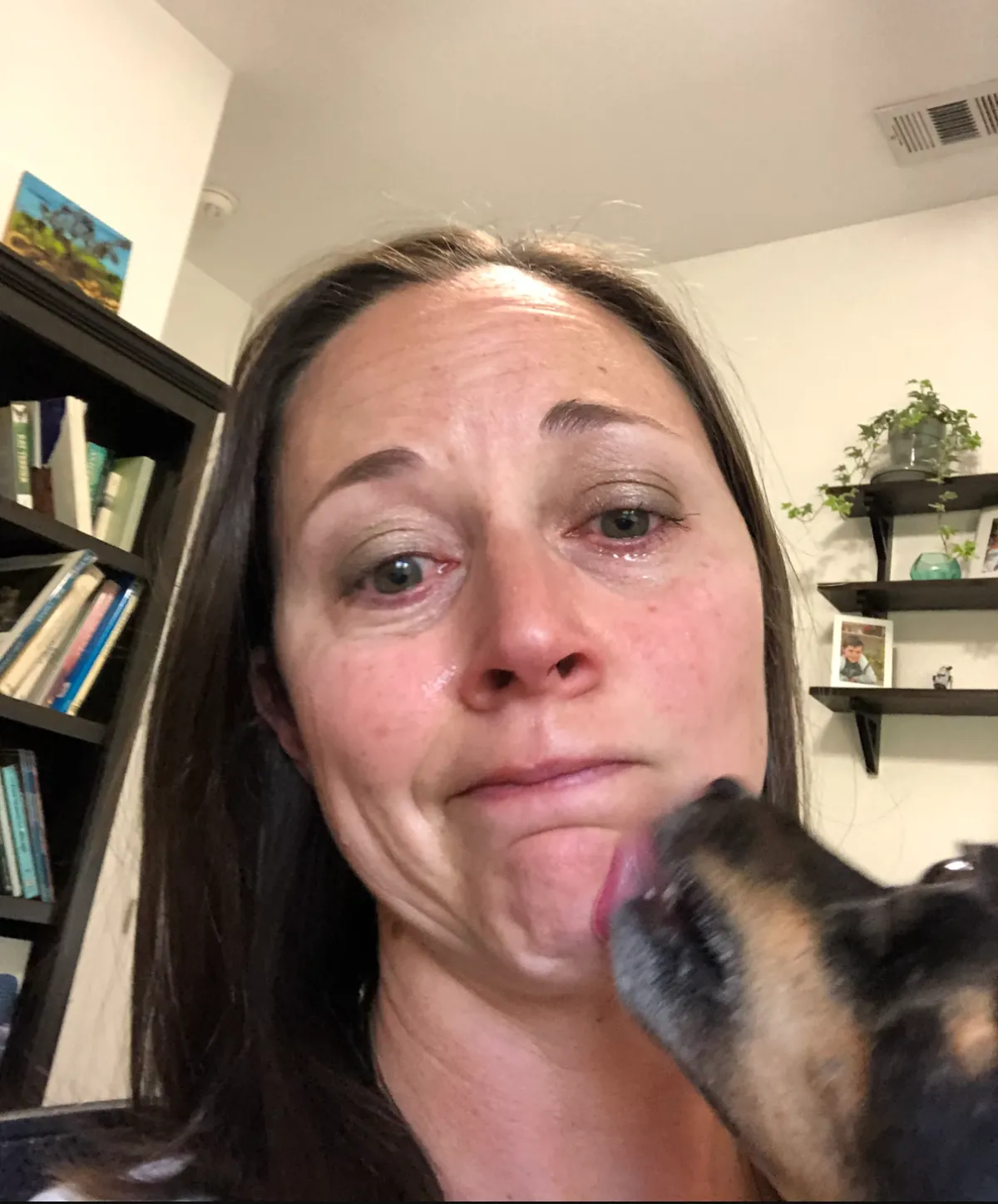
I wasn't sleeping well. I was exhausted. I was frequently sick. I lost weight. I experienced physical pain.
And underneath all of it was the persistent feeling that I wasn't doing any of my roles particularly well.
I couldn't be the director I wanted to be because there was too much work.
But if I gave more to work, I felt like I was failing my family.
There was no place where I felt like I was enough.
Eventually, I realized something had to change.
The Hardest Part Wasn't Learning to Manage the Work
Toward the end of my time in that role, I started getting support.
I reached out to our Employee Assistance Program and I went to therapy.
I hired and paid for my own coach.
And slowly, I started recognizing something uncomfortable.
Some of the things I was doing “for everyone else” weren't necessarily because everyone else needed me to do them.
Sometimes I was doing them because I believed I had to.
Because I thought nobody else could handle it.
Because asking for help was uncomfortable.
Because disappointing someone felt worse than exhausting myself.
Because I hadn't yet learned how to advocate for what I needed.
Those realizations didn't suddenly make the workload reasonable.
They did, however, help me begin separating what was mine to carry from what wasn't.
And that changed me.
You Cannot Wait Until You're Empty
Someone once gave me an image that has stayed with me:
Fill your own cup, and then lovingly give from the overflow.
For years, I did the opposite.
I poured and poured and poured, and when there was nothing left, I wondered why I couldn't keep going.
Today, I think about self-care very differently.
It isn't emergency care.
It isn't something I do only when life becomes unbearable.
It is preventative care.
It is the consistent practice of noticing what I need and responding before I reach empty.
For me, that means protecting time in the morning to stretch and move my body. To pray. To ground myself. To journal. To have quiet.
I love people. I consider myself an extrovert in many ways. But I've also learned that I need solitude and downtime to come back to myself.
Those practices aren't extras I earn after everything else gets done.
They are part of how I am able to show up for everything else.
Nurse Leaders Are Human, Too
I think we've made progress in talking about nurse well-being.
But I sometimes wonder whether we've forgotten the nurse leader in that conversation.
Nurse leaders are often asked to hold an extraordinary amount.
Support your staff.
Improve engagement.
Address turnover.
Implement the initiative.
Meet the metric.
Manage the budget.
Have the difficult conversation.
Build the culture.
Take care of your people.
And, of course, take care of yourself.
But there are still only 24 hours in the day.
There is still only one human being doing the job.
Perhaps supporting nurse leaders isn't about teaching them how to squeeze one more responsibility into an already impossible workload.
Perhaps it starts by helping them recognize their own humanity.
A Different Way to Lead
Looking back, I wish I had learned earlier that advocating for myself wasn't a failure of leadership.
It was leadership.
I wish I had known how to say:
This isn't sustainable.
I need help.
We cannot do all of these things well at the same time. What is the priority?
What can we stop doing?
Who else can we develop to help carry this?
Because good leadership isn't about becoming indispensable.
In fact, I think some of our most important work as leaders is doing the opposite.
It's developing people.
It's inviting staff into solutions rather than believing we have to create every solution ourselves.
It's identifying the nurses with potential and giving them opportunities to grow.
It's teaching, mentoring, encouraging, and gradually creating several people who might someday be ready to sit in our chair.
Because none of us will be there forever.
And perhaps we can do a better job preparing the next generation of nurse leaders than simply waiting until they are sitting in the chair to teach them how to lead.
And I wish I could tell you I learned these lessons once and never had to learn them again.
I didn't.
Even now, years later, I sometimes recognize myself slipping into familiar patterns: carrying too much, trying to make something work through sheer effort, or realizing I've stopped listening closely enough to what I need. The difference is that I recognize it sooner now. I have more tools, more awareness, and more willingness to ask myself the questions I didn't know to ask back then.
Maybe growth isn't reaching a point where we never repeat an old pattern. Maybe it's noticing when we've found ourselves there again and choosing what we want to do next.
Start With Yourself
This is one place I think The NURSE Framework can be just as valuable for nurse leaders as it is for the nurses they support.
N – Notice
What is happening in you right now? What are you carrying? What is your body telling you? Where are you depleted?
U – Understand
Get curious. Why is it so difficult to put something down? Why does asking for help feel uncomfortable? What beliefs about being a “good leader” might be influencing how you're showing up?
R – Respond
What is one intentional response you could choose instead of automatically taking on more?
S – Support
Who supports you? A mentor? Coach? Therapist? Colleague? EAP? Friend? Leadership team? Where could you ask for help instead of figuring everything out alone?
E – Empower
How can you use what you're learning not only to care for yourself, but to develop and empower the people around you?
Leadership doesn't require sacrificing yourself in service of everyone else.
And taking care of yourself doesn't mean you care less about your staff.
It may actually allow you to lead them better.
So if you're a nurse leader who feels caught somewhere between everything being asked of you and everything your staff needs from you, I want to leave you with a few questions:
What are you carrying right now because you truly need to carry it?
What are you carrying because you've convinced yourself no one else can?
What support do you need that you haven't asked for?
And perhaps most importantly:
What would change if you included yourself among the people you are responsible for caring for?
You Don't Have to Figure It Out Alone
If you're a nurse leader reading this and some of it feels familiar, I hope you know you don't have to have all the answers right now.
I'm continuing to explore ways to better support nurse leaders as whole humans, not just in what they do, but in how they care for themselves while doing it.
If this is something you're navigating, or if you're simply curious about what that kind of support could look like, I'd love to hear from you. Reach out and let's start a conversation.
Sometimes support begins simply by having a place to say, This is hard.
You are a nurse leader.
But first, you are human.
And you deserve to be supported, too.